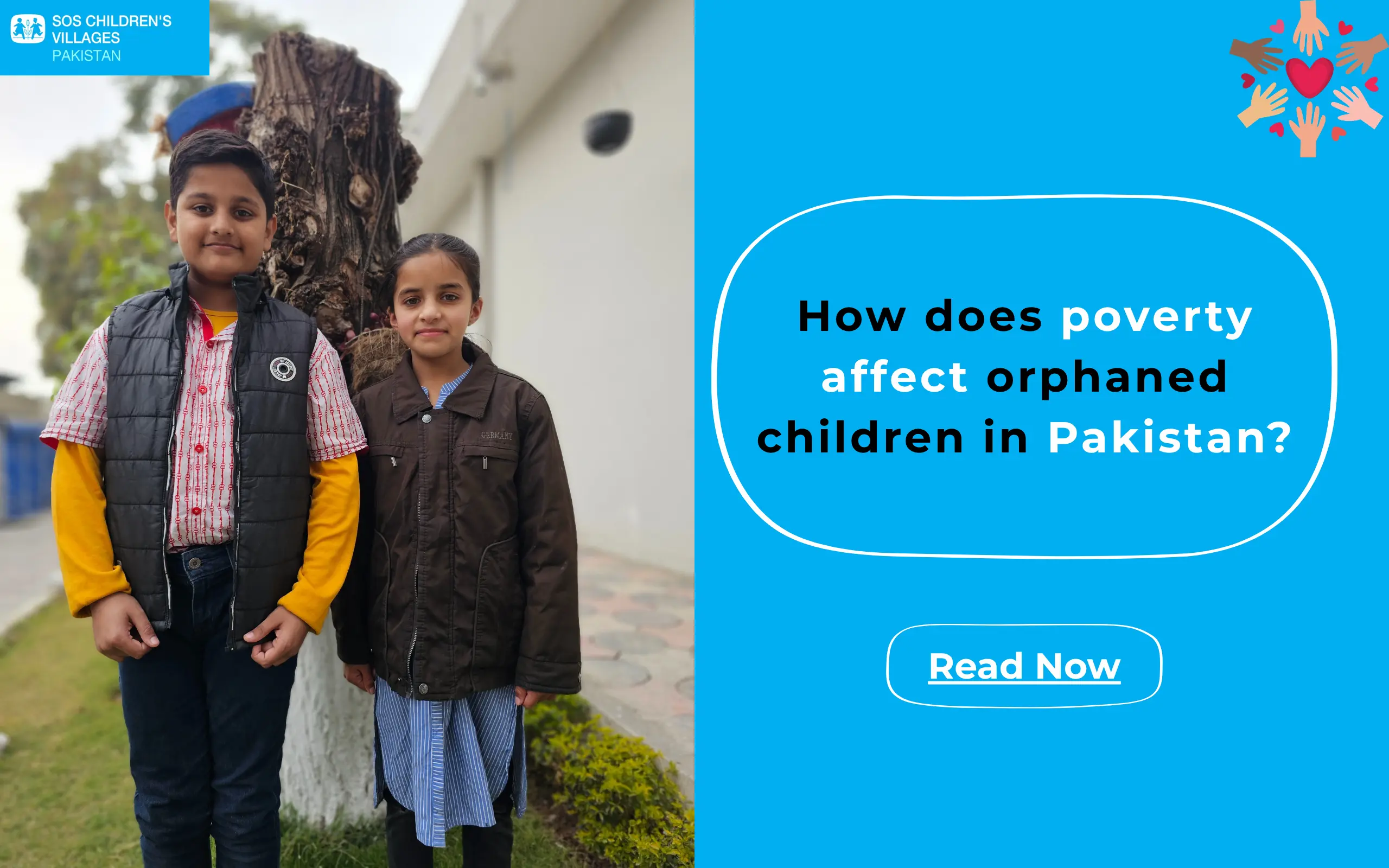
How Does Poverty Affect Orphaned Children in Pakistan?
Poverty changes childhood. Not in small ways. In fundamental ones. It changes what a child worries about when they wake up in the morning. It changes what they expect from the future. Sometimes, it even changes what they believe they deserve. Now imagine being a child who has already lost parental care. The challenges multiply fast.
For orphaned and vulnerable children, poverty is rarely just about money. It affects education, health, emotional well-being, and access to opportunities that many people take for granted. It can turn everyday needs into daily struggles.
That is why conversations about orphaned children cannot be separated from conversations about poverty. The two are deeply connected. And in Pakistan, where many families already face financial pressure, orphaned children often carry the heaviest burden.
Poverty Takes Away Stability First
Most children need a few simple things to grow up well. A safe place to sleep. Regular meals. Access to school. Someone who notices when they are sick. Someone who asks how their day went. Simple things. But poverty has a way of making even those basics difficult. For a child without parental care, stability can disappear almost overnight. Housing becomes uncertain. Food becomes inconsistent. Education becomes harder to maintain.
The result? A childhood focused on getting through the day rather than preparing for the future. That is one reason why strong systems of child care in Pakistan matter so much. Children need environments where their basic needs are met consistently, not occasionally. Consistency gives children room to grow. Without it, survival becomes the priority.
Education Often Suffers First
Ask any teacher and they will tell you the same thing. Children learn best when they feel secure. When they know where they will sleep tonight. When they know there will be food on the table. When they are not carrying the weight of adult problems on their shoulders. Poverty disrupts all of that. Many orphaned children struggle to stay in school because the support around them is limited. School supplies cost money. Transportation costs money. Uniforms cost money.
Even when education is technically available, the barriers add up. Some children miss classes regularly. Others fall behind. Some leave school altogether. And once that happens, future opportunities begin shrinking. A child who leaves education early often faces fewer career options later. The cycle becomes harder to break.
This is why organizations that provide children support in Pakistan place such a strong emphasis on education. It remains one of the most effective ways to create long-term change.
Health Becomes a Constant Challenge
Poverty and health are closely linked. When resources are limited, medical care is often delayed. Small health issues become bigger problems. Preventive care becomes difficult to access. For orphaned children, these challenges can be even more serious.
A child dealing with untreated health concerns may struggle academically, socially, and emotionally. Something as simple as poor nutrition can affect concentration, energy levels, and development.
The difficult part? Many of these problems are preventable. Children do not need extraordinary solutions. They need reliable access to healthcare, nutritious food, and safe living conditions. That requires resources. And resources require support.
The Emotional Impact Is Often Overlooked
Here is something people do not talk about enough. Poverty affects how children see themselves. A child who constantly feels left behind may begin to believe they are worth less than others. A child who sees opportunities passing them by may stop expecting good things to happen. Over time, that mindset becomes its own challenge. Confidence weakens. Motivation drops. Hope starts to fade.
For children who have already experienced loss, this emotional burden can become especially heavy. This is why quality care goes beyond meeting physical needs. Emotional support matters too. Children need encouragement. They need guidance. They need adults who remind them that their circumstances do not define their potential. That kind of support can change the direction of a child's life.
Abandonment and Poverty Often Go Hand in Hand
Not every vulnerable child has lost parents through death. Some children have been abandoned because families simply could not cope with overwhelming financial hardship. Some have been withheld from caregivers because of things that have happened to them that they cannot control. It's a sad truth.
Pressures are felt by families as a whole because of poverty. Sometimes, children are the victims of the conflict that they were not responsible for. That's why Abandoned children care Pakistan is still crucial in nature. These children need more than temporary assistance. A stable environment is needed in which they can begin to rebuild trust and a sense of security. Children should never feel disposable. Yet many abandoned children spend years wondering why they were left behind. That emotional question does not disappear on its own.
Why Family-Like Care Matters
When people hear the term children orphanages in Pakistan, they often imagine large facilities filled with children. But here is the thing. Children do not simply need accommodation. They need relationships. They need a connection. They need people who remain present in their lives.
This is one reason the SOS Children's Villages Pakistan approach is so powerful. Instead of focusing solely on shelter, SOS creates family-like homes where children grow up with consistent caregivers and a stable support system.
The difference is significant. Children experience routines. They attend school regularly. They build relationships. They develop confidence in an environment designed to support their growth. That stability helps counter many of the effects poverty creates.
Poverty Limits Opportunities Long Before Adulthood
People often think poverty only affects the present. In reality, it affects the future too. A child who misses educational opportunities today may struggle professionally years later. A child without access to proper care may face challenges that continue into adulthood. The impact compounds over time.
That is why early intervention matters so much. Helping a child at age eight can affect what happens at eighteen. Supporting a child through school can affect what happens twenty years from now. These connections are not always visible immediately. But they are real. Every opportunity a child receives today creates possibilities for tomorrow.
Why Donations Matter
Some people hesitate before donating because they wonder whether one contribution can really make a difference. The honest answer? One donation will not solve every problem. But it can absolutely change part of a child's story. And enough people making that choice creates something powerful.
A donation for child in Pakistan helps provide practical support that children rely on every day. It contributes to education, healthcare, safe housing, emotional care, and long-term development. Most importantly, it creates stability. And stability is often the foundation that allows everything else to improve. Children cannot focus on their future if they are constantly worried about basic needs. Support helps remove those barriers.
A Better Future Is Possible
The challenges facing orphaned children are real. Poverty creates obstacles that no child should have to carry. But poverty does not have to determine the outcome. Children are capable of remarkable growth when they receive the right support at the right time. They can succeed in school. They can build careers. They can become leaders, professionals, parents, and mentors.
The key difference is opportunity. And opportunity often begins with someone deciding to help. That help may come through an organization. It may come through sponsorship. It may come through a donation. However it arrives, it matters.
Be Part of a Child's Next Chapter
Every child deserves more than survival. They deserve safety. Education. Healthcare. Encouragement. A chance to build a future they can be proud of. SOS Children’s Villages Pakistan works every day to provide exactly that. Through family-like care, education support, healthcare services, and long-term guidance, SOS helps vulnerable children move beyond hardship and toward opportunity. But this work depends on people who choose to get involved.
If you want to make a meaningful difference, consider supporting SOS Pakistan today. Your contribution can help provide the care, stability, and opportunities that vulnerable children need to grow with confidence. Visit https://www.sos.org.pk/Donations and make your contribution today. Because poverty may shape the beginning of a child's story. It does not have to decide the ending.